Best Bokashi Kits: 5 Compared
Bokashi is a different animal from the hot pile you turn outside: it's an anaerobic fermentation. In a sealed, airless bucket, effective microorganisms (EM) and a carbon carrier (bran) break down raw food scraps — meat, dairy, the stuff a hot pile will never take — in a week or two, with no heat, no turning, and no smell. The kit differences that actually matter are capacity, what's in the box, and whether the two-bin rotation matches your rhythm. Here are the five setups that cover every kitchen, chosen by how much waste you really throw away.
How we pick a bokashi kit
Four questions, all about your kitchen rather than the brand:
- How much kitchen waste you generate. A single 4–5 gallon bucket takes roughly one to two weeks of scraps for a small household. If you're cooking for three or four people every day, you'll outpace a single bucket mid-rotation — that's the whole point of the two-bin kits.
- One bucket or two. The method is a two-stage flow: fill bucket A, let it ferment a week or two, bury or pot that batch, then start on bucket B. A single bucket means a pause between batches (you wait to bury batch one before refilling). A two-bin kit means you're always fermenting and never stopped.
- What's actually in the box. A real "starter kit" should ship the bucket, the EM culture, and the bran — the carbon and the food for the microbes. The cheapest "bucket + bran" options assume you already have the EM or use a powder; it's cheaper, but one more thing to buy and measure.
- The all-season point. Bokashi ferments at room temperature, so it keeps working in the dead of winter while an outdoor hot pile goes dormant. This is the one composting method that doesn't shut down in January.
The five, spec-for-spec
| Kit | Brand / origin | Capacity | In the box | Rotation |
|---|---|---|---|---|
| SCD Single | SCD Probiotics (US) | 5 gal | Bucket + EM + bran | Single (pauses between batches) |
| SCD 2-Bin | SCD Probiotics (US) | 2 × 5 gal | 2 buckets + 5 lb bran | Continuous |
| Organko Single | TeraGanix (EU) | 4 gal (15.3 L) | Bucket + base + EM + bran | Single (pauses between batches) |
| Organko Set | TeraGanix (EU) | 2 × 4 gal | 2 buckets + base + bran | Continuous |
| Budget bucket | Generic | ~5 gal | Bucket + bran (add your own EM) | Single |
Capacity is the real constraint. A "5 gallon" bucket is the standard household size; the Organko's 4 gallons is close but a touch smaller, and the two-bin versions are the same bucket doubled for a no-pause rotation. Prices move weekly — the listing behind each link shows the current price.
The picks
-
01
View SCD Single Kitaffiliate linkBest overall — SCD Probiotics All Seasons Single Starter Kit
The category standard, and the right first bokashi system. The 5-gallon bucket comes with the EM culture and the fermented wheat bran in the box, so the whole two-stage process runs out of the bag with nothing else to source. It's the size that fits most kitchens, it has by far the largest review base in the category (which means the most real-world field data behind it), and the "All Seasons" name isn't marketing — the fermentation runs at room temperature, so it keeps working through winter. If you're starting, this is the one to buy: the smallest honest bokashi system, at the size that matches a normal household.
-
02
View SCD 2-Bin Kitaffiliate linkBest for a continuous workflow — SCD 2-Bin Kit + 5 lb bran
The same proven system, but with two buckets and a 5 lb bag of bran so you can keep fermenting while the first batch finishes. That's the difference between "I have to wait until I've buried batch one before I can fill again" and "I never stop." If you're cooking for a household every day, the single bucket will hit a wall mid-week and the scraps have to wait in the fridge — the two-bin version removes that wall entirely. It's the pick that actually matches how a busy kitchen runs, and the extra bran is the reason most people who try a single bucket end up buying this one next.
-
03
View Organko Bucketaffiliate linkBest European / dishwasher-safe option — TeraGanix Bokashi Organko Essential Bucket
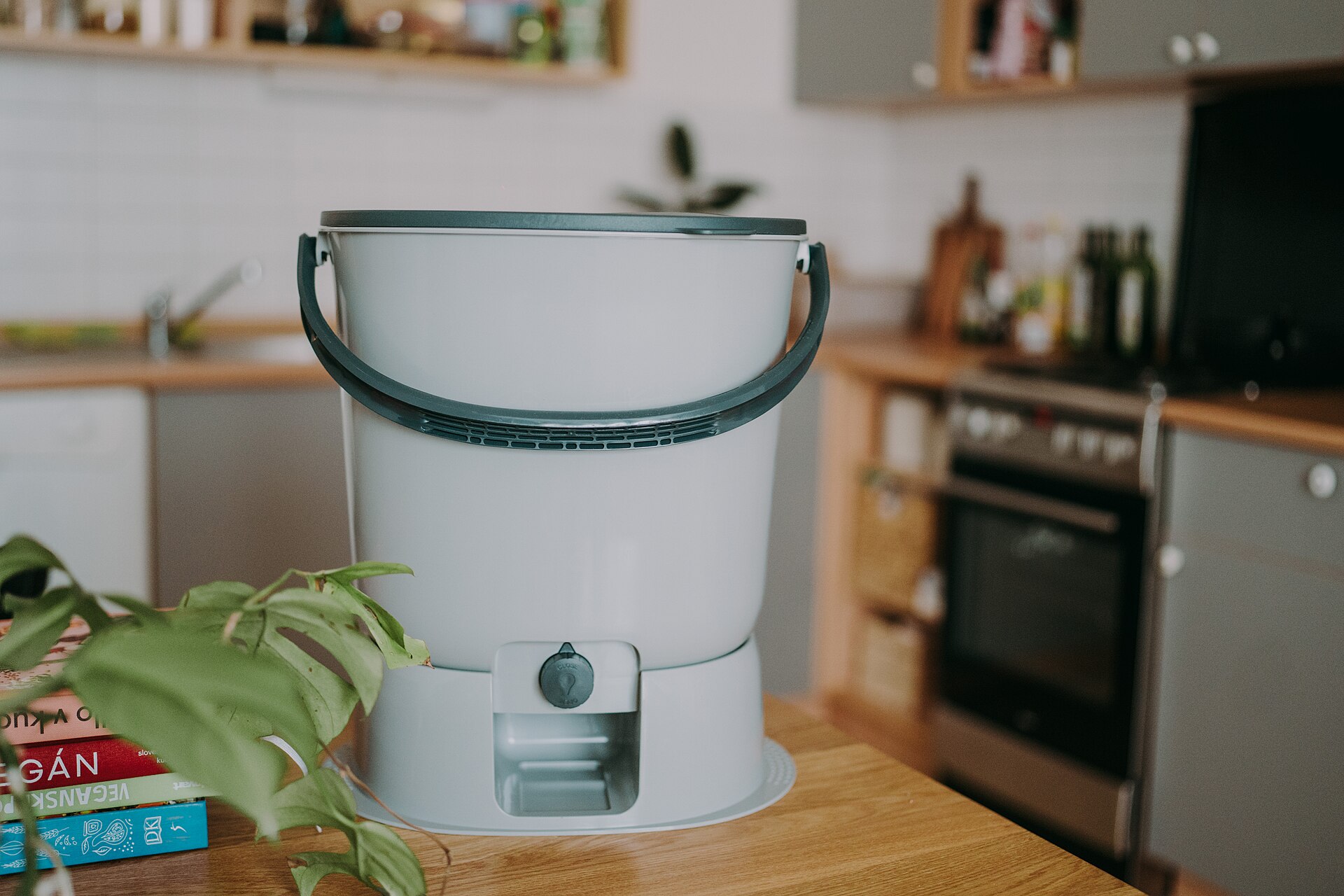
The 4-gallon (15.3 L) bucket-and-base from TeraGanix runs the same anaerobic EM + bran fermentation, but it's built around an air-tight enclosure with a base that catches the liquid, and the whole bucket goes in the dishwasher — which, for a bucket that holds fermented food, is a genuinely useful detail. The all-season claim holds here too: it ferments at room temperature and can take the finished mass into the soil even below freezing. The honest caveat is the data: at $67 and a 3.5-star rating across 11 reviews, the Organko has a much smaller review base than the SCD kits, so there's less field evidence behind it. It's a real alternative for anyone who wants a slightly smaller capacity, a European build, and a dishwasher-safe bucket — just going in with eyes open about how much longer the SCD line has been tested by other people.
-
04
View Bucket + Branaffiliate linkBest budget / DIY starter — generic bucket + bokashi bran
Bokashi is, at its core, just an airtight bucket, some bran, and a dose of EM. You don't need a branded kit to make it work: a food-grade 5-gallon bucket, a bag of bokashi bran, and the EM starter do the same fermentation at a fraction of the price of a named kit. This is the pick for two people — the one who wants to try the method before committing to a full kit, and the one who already has a bucket and just needs the inputs. The trade-off is that you're assembling the system yourself (sourcing the EM, measuring the bran), so it takes a little more setup and a little more attention. If you want to see whether you'll actually stick with bokashi before spending the branded-kit money, this is the honest way in.
The four kit links above are Amazon affiliate links. We may earn a commission if you buy through them, at no extra cost to you. If you like the Organko, the two-bin Organko setaffiliate link is the continuous version of the same bucket.
Worth knowing: the liquid is a byproduct, not a failure
Every bokashi bucket drips a thin liquid as it ferments. People new to the method take that for a leak or a problem; it's actually one of the two outputs. Drain it off, dilute it (a common ratio is about 1:100 with water), and it works as a liquid feed for plants. The solid fermented mass is the other output — it's not finished compost, it's a pre-compost that turns into finished compost in roughly two weeks once you bury it. That's the pairing to make: a long-handled fork to dig the trench to bury the mass in. We compare the turning and digging tools on our Best Compost Turners page — it's affiliate-linked, so check it before you buy.
The rules that beat the hardware
- Bokashi is anaerobic — keep the lid tight. The whole method depends on no oxygen getting in. A lid that seals loosely lets air in, and what you have stops being "fermenting" and starts being "rotting" (smell, surface mold). Press the latch down on every addition.
- Press scraps down and top with a thin layer of bran. Compact the waste and dust a little bran over it with each add. The bran is both the carbon and the food for the EM — skip it and the culture starves.
- Bury the finished mass; don't just pile it on top. The fermented batch isn't done — it's pre-compost. Dig a trench at least a few inches deep, drop it in, and cover. In about two weeks it breaks down into usable compost in place.
- Use the liquid or lose it. If you let it sit in the base, it's just a mess to clean. Drain it, dilute it, and use it as a feed — or pour a little down the drain if you'd rather not deal with it at all.
- This is your winter method. When the outdoor hot pile is frozen and the worms are slowed, the bokashi bucket keeps running at room temperature. It's the reason most serious composters keep one in the kitchen year-round.
Affiliate disclosure: the product links on this page are Amazon affiliate links. We may earn a commission if you make a purchase at no extra cost to you. Every pick above is labeled "affiliate link" at the point of purchase. Full disclosure.