Best Compost Turners: 4 Tools Compared
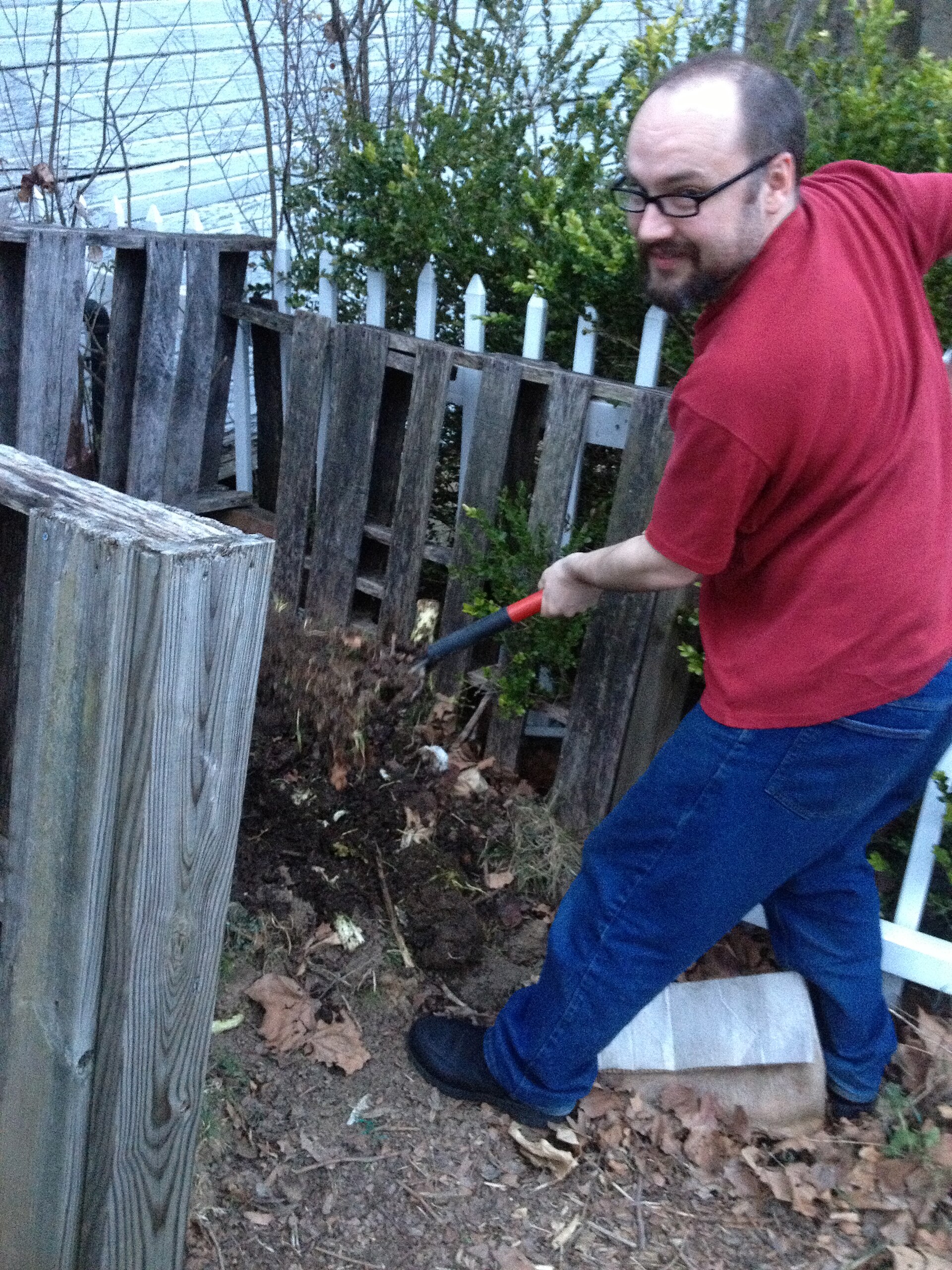
Every composting system comes down to one repeated job: move the material, pull in air, and fold the hot center back to the cooling edges. The tool you move it with decides how fast the pile works and how much of your back survives the season. These are the four tools that cover every pile size we work with, chosen by the job each one actually does — not by which one has the better adjectives.
How we pick a turning tool
Three questions decide the tool, and they're all about the pile — not the yard:
- The size of the pile you're turning. A small heap (a bin, a seedbed, under a cubic yard) wants a short, nimble cultivator. A standard three-bin backyard pile (1–2 cu yd) wants a 4-tine compost fork. A big pile or a manure windrow (3+ cu yd, or commercial volume) wants the long reach and wide tine spread of a manure fork.
- Where the air has to get in. In a tumbler or a closed bin you can't swing a fork inside the drum — the tines would hit the wall. That's the job of a narrow corkscrew-style aerator: it drives air straight down through the mass without breaking it up, which is all a sealed system needs.
- Handle geometry and leverage. A longer handle is more leverage and less bending, but past a point a long fork becomes unwieldy inside a bin or a low tumbler. Match the tool's reach to the pile's height, not to your arm. A 45-inch fork fits a standard pile; a 54-inch manure fork is for material a fork-length taller.
The four, spec-for-spec
| Tool | Type | Tines | Reach (handle) | Build | Best for |
|---|---|---|---|---|---|
| 45″ compost fork | Spading / compost fork | 4 | 45″, wood | Steel, Y-grip | Standard backyard piles |
| 3-tine cultivator | Hand tiller / cultivator | 3 | ~55″, adjustable steel | Coated steel, anti-rust | Small piles, seedbeds, mixing |
| Truper 54″ manure fork | Manure / hay fork | 3 | 54″, white ash | One-piece forged head | Large piles, manure, commercial |
| EJWOX aerator | Corkscrew aerator | — | Short, stainless | Stainless corkscrew | Tumblers & closed bins |
Reach is the handle length, which is the real measure of leverage — a longer handle turns the same pile with less bending. Prices move weekly; the listing behind each link below shows the current price.
The picks
-
01
View 45″ Compost Forkaffiliate linkBest all-round for a standard pile — 45″ 4-Tine Compost Fork
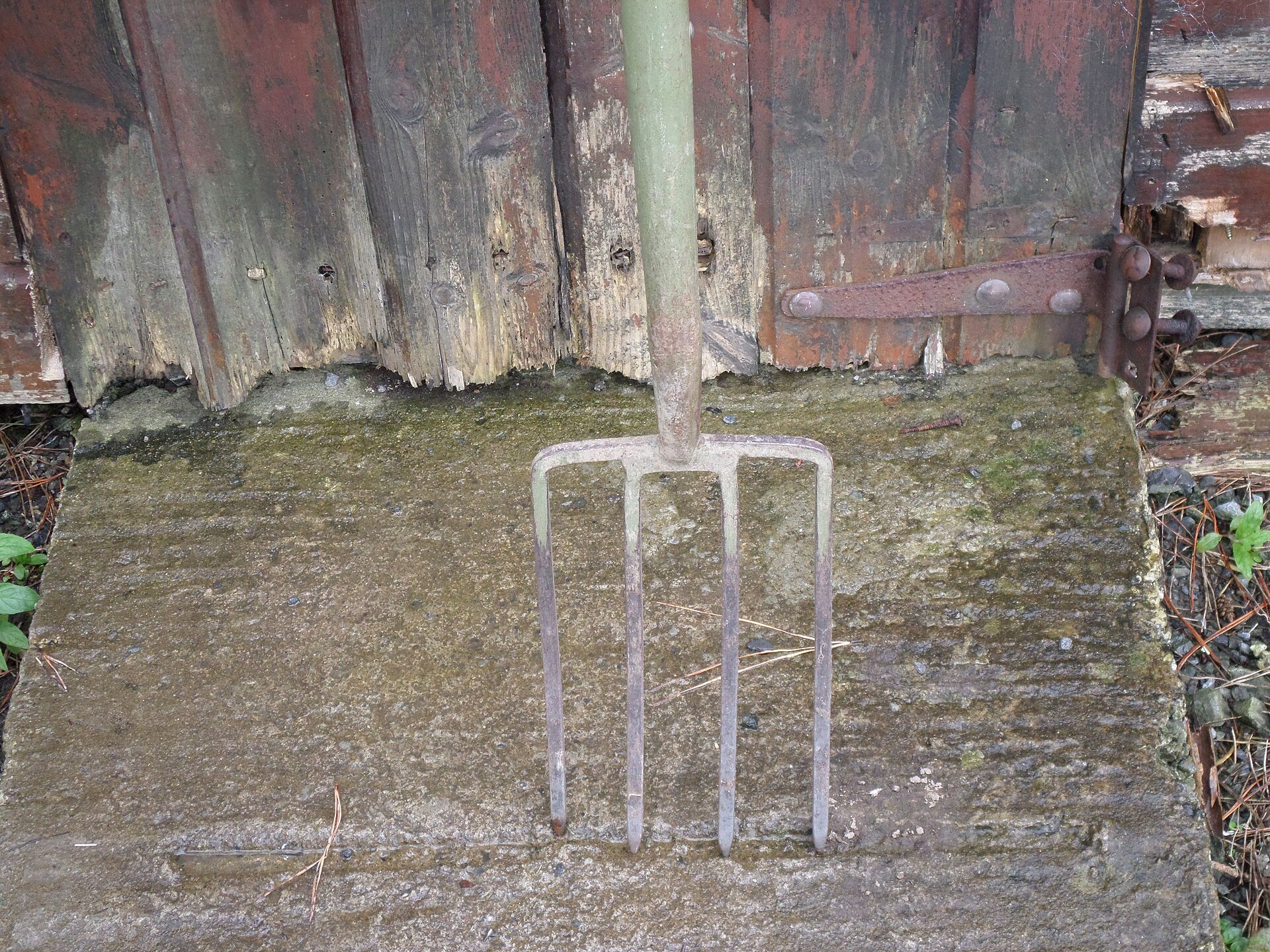
The default we reach for on a normal three-bin pile: four tines on a 45-inch reach with a wooden handle and a steel Y-grip. Four tines is the sweet spot — enough width to grab a real load of material per stroke without so wide that you're dragging it. The 45-inch length gives you leverage without the awkward over-reach of the commercial forks, and the wood handle grips better than steel when your hands are wet and the pile is heavy. At a 4.5-star rating across a large review base and a price that stays low, it's the tool that does 80% of backyard composting with the least fuss.
-
02
View 3-Tine Cultivatoraffiliate linkBest for small spaces & seedbeds — 3-Tine Long Handle Cultivator
When the "pile" is really a bin, a raised bed, or a patch you're turning in place, a full compost fork is too big and too wide. This three-prong cultivator with an adjustable steel handle (roughly 55 inches with the extension) works in tighter quarters: it breaks up clumps, loosens a settling heap, and mixes in browns or a handful of biochar without the swing room a long fork needs. The anti-rust coating is the practical detail — it lives outside and touches wet carbon every time. 4.5 stars across hundreds of ratings, and the cheapest tool on this list.
-
03
View Truper 54″ Manure Forkaffiliate linkBest for big piles & manure — Truper Tru Pro 54″ Manure Fork
The workhorse for material that's a fork-length taller than a backyard pile — a full manure windrow, a deep pile, or anything you turn several times a week. The 54-inch reach (a 47-inch white-ash handle per the spec sheet, with the head on top) is the leverage story: you turn a heavy, damp load with your shoulders instead of your lower back. The one-piece forged head is the durability claim — Truper builds these for commercial and agricultural use, and the "contractor's choice" line is aimed at people who turn material for a living. The white-ash handle flexes under load instead of snapping, which is exactly what you want in a fork that eats a season of manure. The honest trade-off is price: it costs about double the backyard fork, and you won't use all of it on a small pile.
-
04
View EJWOX Aeratoraffiliate linkBest for tumblers & closed bins — EJWOX Compost Aerator
A different problem, a different tool: in a tumbler or a sealed bin you can't fit a fork inside the drum, so the air has to get in some other way. This stainless-steel corkscrew aerator drives straight down through the mass and pulls air through it on the way out, keeping the pile aerobic without dismantling it. That's the whole job — and it does it better than poking holes with a stick, because the corkscrew geometry pulls the air through rather than just opening a gap that collapses. It's the accessory that makes a closed tumbler actually behave like a hot pile, and the one tool in this category that's sized to fit where a fork physically can't.
The four tool links above are Amazon affiliate links. We may earn a commission if you buy through them, at no extra cost to you.
Worth pairing: a thermometer
Turning is only worth doing if you know why you're turning — and that's a temperature. A pile you're actively managing should be holding in the thermophilic range; when it drops, that's your cue to turn it back up. A $15–$20 deep-stake compost thermometer is the cheapest instrument that tells you the difference between "stir it on a schedule" and "stir it when the data says to." We benchmarked five against each other in our Compost Thermometer Showdown — it's an affiliate-linked page, so check it before you buy.
The rules that beat the hardware
- Turn on the temperature, not the calendar. A warm-season pile usually wants turning every 3–5 days while it's holding above ~130°F; the moment it cools below ~120°F is when a turn re-ignites it. A schedule without a thermometer is just guessing.
- Move the outside in, the inside out. A real turn isn't a stir — it's folding the cooler outer layer (where most of the microbes are) into the hot core, and pushing the spent core to the edge to cool. That's why a wide fork that grabs a big load beats a narrow one on a large pile.
- Match the tool to the pile height. If you're bending over a tumbler to use a 45-inch fork, you don't need the fork — you need the aerator. The tool should let you work with a straight back; if it doesn't, it's the wrong tool for that pile.
- Don't turn a pile that isn't ready. Turning a fresh, cold, wet pile just breaks up the maturing structure. Turn to aerate a hot pile or to mix in new browns — not to "work on it" because you're supposed to be composting.
Affiliate disclosure: the product links on this page are Amazon affiliate links. We may earn a commission if you make a purchase at no extra cost to you. Every pick above is labeled "affiliate link" at the point of purchase. Full disclosure.